

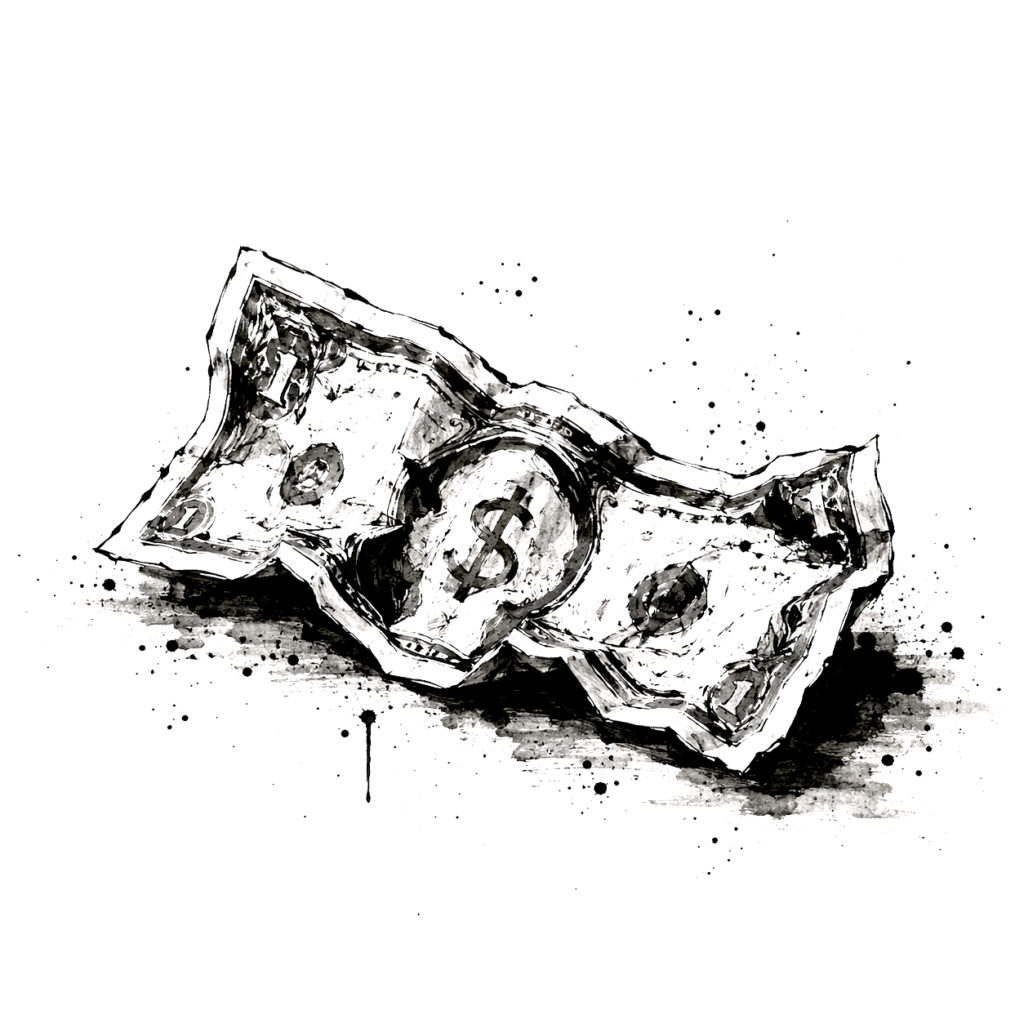
The room was still half asleep when the professor entered.
Morning light rested against the windows, pale and quiet, while the students sat scattered across the hall with notebooks open and minds only partly present. Some were waiting for wisdom. Some were waiting for the hour to end. Most were somewhere in between.
The professor did not begin with a definition, a theory, or a sentence written neatly across the board.
He reached into his jacket and pulled out a twenty dollar bill.
It was fresh. Almost too fresh. Its edges were sharp, its surface smooth, its colour untouched by the tired hands of the world. It looked like something that had not yet been passed around, folded into pockets, forgotten in drawers, used in desperation, or given away with love.
He held it up between two fingers.
“Who wants this?”
The question seemed almost foolish. A few students laughed. Then hands rose across the room, quick and certain, as if value had no need to explain itself.
The professor smiled.
Then, without another word, he crushed the bill in his fist.
The paper folded in on itself. Its perfect face vanished into wrinkles. The crisp surface became a small, wounded thing, creased and bent and changed. He opened his hand and held it up again.
“Who wants it now?”
The hands rose again.
A little slower perhaps, but still without doubt.
The professor nodded, as if the lesson had begun but not yet arrived.
He let the bill fall to the floor.
It landed silently, almost sadly, at his feet. Then he stepped on it. Once. Twice. The clean paper met the dust of the ground. It bent beneath the weight of him. The students watched as something that had been held up with care was pressed into the floor without mercy.
He picked it up again.
Now it was marked. Bruised with dirt. Its folds had deepened. It no longer looked new. It no longer looked untouched. It looked like it had travelled through hands that did not care enough to keep it beautiful.
“Who wants it now?”
The hands rose again.
This time the room was quieter.
The professor looked at the bill for a moment, then carefully tore it.
Not enough to destroy it completely, but enough for the sound to pass through the room like a small act of violence. A tear down the side. A separation. A visible wound. Something that could not pretend to be whole in the same way anymore.
He held it up one final time.
Crumpled. Dirty. Torn.
“Who still wants it?”
Every hand rose.
And there it was.
Not in the bill, but in the silence after the question.
The lesson had not been about money. Not really. It had been about the strange blindness we carry inside ourselves. How easily we recognise worth in a damaged object, yet forget it in a damaged person. How quickly we understand that a bill does not lose its value because it has been crushed, stepped on, or torn, yet struggle to believe the same about a human soul.
We are far less generous with ourselves than we are with paper.
Life has a way of placing its hands around us and closing its fist. It crumples us through failure, rejection, grief, shame, exhaustion, and all the quiet disappointments we never mention aloud. It presses us into the ground through loss, responsibility, fear, and days where even breathing feels like carrying a stone. It tears at us through love that ends, dreams that collapse, people who leave, and versions of ourselves we never got to become.
And after all of this, we look at ourselves and whisper:
I am not what I used to be.
As if that means we are worth less.
But perhaps the deeper truth is this:
You were never valuable because you were untouched.
You were never precious because your edges were clean, your surface smooth, your story easy to read. Your worth did not come from being unbroken, admired, useful, beautiful, successful, or understood. Those things may change. They often do.
Your worth was never born from appearance.
It was born from essence.
The bill did not keep its value because it still looked perfect. It kept its value because its value was never held in its perfection. The damage changed its form, not its truth.
And maybe that is the aha moment we keep missing.
We do not lose ourselves because life marks us. We only forget where to look.
We stare at the creases and call them evidence. We stare at the dirt and call it identity. We stare at the tear and call it final. We mistake what happened to us for what we are.
But the soul is not the wound.
The soul is the one who survived it.
There is a quiet dignity in every person who has been bent by life and still rises. In every heart that has been stepped on and still finds a way to love. In every spirit that has been torn and still refuses to become cruel. These are not signs of reduced worth. They are signs that something sacred remained when everything else was tested.
A crumpled bill can still be spent.
A wounded heart can still give.
A tired soul can still shine.
And perhaps, in some mysterious way, the marks do not only tell the story of what harmed us. They also tell the story of what could not destroy us.
So when life leaves you wrinkled, do not confuse the crease with your essence.
When the world steps on you, do not mistake the dust for your name.
When grief tears something open inside you, do not believe the wound has become the whole of you.
You are not less because you have suffered.
You are not less because you have changed.
You are not less because you no longer look like the untouched version of yourself.
You are still here.
And sometimes, that alone is the proof.
Your worth was never in the smoothness of your surface.
It was in the life within you that nothing managed to erase.

Add your first comment to this post